

Planning building work near a shared wall or boundary can feel stressful. You want the job done right, you want to stay on good terms with your neighbour, and you really don’t want to break the law. That is why these tips for choosing the best party wall surveyor in 2026 matter so much.
The right surveyor protects your property, keeps your project moving, and saves you money. The wrong one can cost you time, money, and a lot of sleep.
We are the surveyor and content team at FPWS (First for Party Wall Surveyors). We deal with party wall matters every single day. This guide shares what we have learned, in plain English, so you can choose with confidence.
Quick Answer: How To Choose The Best Party Wall Surveyor
To choose the best party wall surveyor, pick someone who specialises only in party wall work, holds proper professional membership, and understands their duty to act fairly.
Here is the short version:
- Choose a specialist, not a general surveyor who “also does” party walls.
- Check their membership of bodies like the FPWS, the Pyramus & Thisbe Society, or RICS.
- Confirm they act impartially under the Party Wall etc. Act 1996.
- Get clear, written fees before you appoint anyone.
- Check they have professional indemnity insurance.
- Pick someone responsive who answers your questions clearly.
Get these six things right, and you are most of the way to a smooth, lawful project.
What Does a Party Wall Surveyor Actually Do?
A party wall surveyor is a trained professional who manages the legal process when your building work might affect a neighbour’s property.
Their job is to make sure the work follows the Party Wall etc. Act 1996. This is the law for England and Wales. It does not apply in Scotland or Northern Ireland.
The surveyor helps with things like:
- Serving the correct party wall notice on the adjoining owner.
- Recording the condition of the neighbour’s property before work starts (a “schedule of condition”).
- Preparing the party wall award, which is the legal document that sets out the rules for the work.
- Sorting out any dispute fairly if one comes up.
Here is the part many people miss. A party wall surveyor is not your personal lawyer. Even when you appoint one, they must act fairly between both owners. Their duty is to the Act, not just to whoever pays them. A good surveyor will explain this honestly from the start.
Why Choosing the Right Surveyor Matters More in 2026
You may have seen headlines about “new Party Wall Act rules for 2026.” Let us be honest and clear about this.
The Party Wall etc. Act 1996 itself has not been rewritten for 2026. The official law has not changed. What has changed is the way the process works in real life.
In practice, three things now matter more than ever:
- Better evidence. Neighbours and surveyors expect detailed photos, drawings, and method statements. A vague notice that just says “rear extension” is no longer good enough.
- Electronic service. Notices and documents can be served by email, but only if the person receiving them has agreed to that. (This option has existed since 2016, but it is far more common now.)
- Higher expectations. Homeowners want fast replies, clear costs, and tidy paperwork.
So the real “2026 change” is simple. The bar for quality is higher. That makes choosing a skilled, modern surveyor even more important.
Getting it wrong is expensive. A bad notice can be invalid. Invalid notices can lead to delays, disputes, or even an injunction that stops your build. The right surveyor helps you avoid all of that.
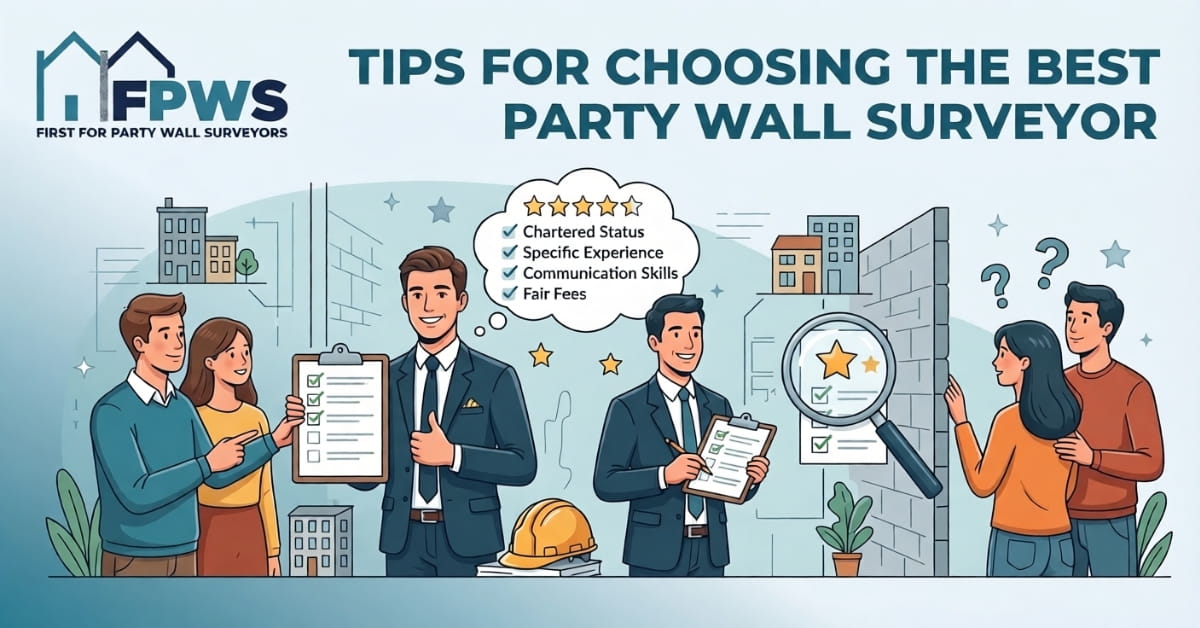
Tips For Choosing The Best Party Wall Surveyor
Now, let us get practical. These are the checks we would tell our own friends and family to make.
1. Always Choose a Specialist
This is the single most important tip. Party wall work is a niche skill. Many general surveyors handle it now and then, but rarely.
A specialist deals with notices, awards, and disputes constantly. They know the common traps and how to avoid them. At FPWS, party wall work is the only thing we do. That focus means fewer mistakes and faster results for you.
2. Check Their Professional Membership
Here is something surprising. The law does not stop anyone from calling themselves a “party wall surveyor.” There is no official licence you must hold. The Act simply says a surveyor must not be a party to the matter.
That means you must do the checking. Look for membership of a respected body, such as:
- FPWS – the Faculty of Party Wall Surveyors.
- The Pyramus & Thisbe Society – a well-known party wall body.
- RICS – the Royal Institution of Chartered Surveyors.
Members of these bodies are screened, trained, and held to professional standards. That gives you real peace of mind.
3. Make Sure They Understand Impartiality
A trustworthy surveyor will never promise to “fight your corner” like a lawyer. That is a red flag.
Under the Act, the surveyor must act fairly and reach a reasonable outcome for both owners. A surveyor who acts like a hired gun can cause more disputes, not fewer. Good surveyors protect your interests by getting the process right, not by being aggressive.
4. Ask About Their Experience With Your Type of Work
Not all building work is the same. Loft conversions, basement digs, rear extensions, and new boundary walls each raise different issues.
Ask the surveyor directly:
- “Have you handled projects like mine before?”
- “What problems usually come up with this kind of work?”
Their answer will tell you a lot. A confident, clear reply shows real experience. A vague one is a warning sign.
5. Get Clear, Written Fees Up Front
Money worries cause a lot of stress in party wall matters. A good surveyor removes that worry early.
Ask for fees in writing before you appoint anyone. You should understand:
- How they charge (fixed fee or hourly rate).
- What the fee includes.
- Who pays. In most cases, the building owner pays the reasonable fees of both surveyors.
Be careful with prices that seem far too cheap. Cut-price work often means corners are cut too.
6. Check Their Professional Indemnity Insurance
Professional indemnity insurance protects you if something goes wrong with the surveyor’s advice. Any reputable surveyor will carry it.
Simply ask, “Do you hold professional indemnity insurance?” A good professional will be happy to confirm. At FPWS, our work is overseen by a Chartered Surveyor, and we carry full professional indemnity cover for your peace of mind.
7. Pick Someone Local and Responsive
Local knowledge helps. A surveyor who knows your area understands the typical property types, soil conditions, and common build styles.
Speed matters too. Party wall steps have set time limits. For example, an adjoining owner usually has 14 days to respond to a notice. A surveyor who replies quickly keeps your project on track.
8. Judge How Well They Communicate
You will work closely with this person during a stressful time. Their communication style really matters.
When you first make contact, notice:
- Do they explain things in plain English?
- Do they answer your questions patiently?
- Do they sound calm and reassuring?
If they confuse you at the start, it will only get harder later. The best surveyors make you feel informed, not overwhelmed.
Agreed Surveyor vs Two Surveyors: Which Is Right For You?
When a dispute arises under the Act, there are two main routes. It helps to understand both.
Option 1: The Agreed Surveyor. Both owners use one surveyor who acts fairly for both sides. This is usually cheaper and faster. It works well when everyone is reasonable.
Option 2: Two Surveyors. Each owner appoints their own surveyor. The two surveyors then choose a third surveyor to step in if they cannot agree. This costs more but can suit trickier or tense situations.
Your surveyor should explain which route fits your case and never push you toward the more expensive option without good reason.
Questions To Ask Before You Appoint a Party Wall Surveyor
Keep this short checklist handy. Ask any surveyor:
- Do you specialise only in party wall matters?
- Which professional body are you a member of?
- Have you handled projects like mine?
- What are your fees, in writing?
- Do you hold professional indemnity insurance?
- How quickly do you usually respond?
- Can you act as an agreed surveyor if that suits us?
Honest, clear answers point you to the right person.
Red Flags To Watch Out For
Trust your instincts. Walk away if you notice these warning signs:
- They will not put fees in writing.
- They promise to “win” for you like a lawyer would.
- They cannot prove any professional membership.
- They dodge questions about insurance.
- They are slow to reply before you have even hired them.
- They push you toward costly steps you do not understand.
A good surveyor is open, calm, and clear. Anything less is a reason to look elsewhere.
Frequently Asked Questions
1. Do I legally need a party wall surveyor?
Not always. If your neighbour agrees to your notice in writing within 14 days, you may not need a surveyor at all. But if they disagree or do not reply, a dispute is treated as having started. At that point, a surveyor must be appointed to prepare a party wall award.
2. Who pays for the party wall surveyor?
In most cases, the building owner (the person doing the work) pays the reasonable fees of both surveyors. This is because the work is being done for their benefit. The exact split can be set out in the party wall award.
3. Can anyone call themselves a party wall surveyor?
Yes, and that is exactly why you must choose carefully. The Act only says a surveyor must not be a party to the matter. There is no official licence required. Always check for membership of a respected body like the FPWS, Pyramus & Thisbe Society, or RICS.
4. How long does the party wall process take?
It varies. If your neighbour consents quickly, it can be sorted in a few weeks. If a dispute arises and an award is needed, allow more time. This is why serving your notice early is so important. Notice periods range from one to two months before work starts, depending on the type of work.
5. Can a party wall notice be served by email in 2026?
Yes, but only if the person receiving it has agreed to receive documents electronically. If they have not agreed, you should serve the notice in the traditional way to make sure it is valid.
6. What happens if I ignore the Party Wall etc. Act 1996?
This is risky. If you start work without serving a valid notice, your neighbour can seek a court injunction to stop the work. You may also face delays, extra costs, and legal claims. Following the correct process from the start is always cheaper and safer.
7. Is a building owner’s surveyor on my side?
Not in the way a lawyer would be. Even the surveyor you appoint must act fairly between both owners. The best way they protect you is by getting the legal process right, which keeps your project lawful and on schedule.
How FPWS Can Help You Choose With Confidence
At FPWS (First for Party Wall Surveyors), party wall matters are all we do. That focus is our strength.
Our team of full-time party wall surveyors works across the South East and beyond. We give clear, honest, up-to-date advice under the Party Wall etc. Act 1996. Whether you are a building owner planning work or an adjoining owner who has received a notice, we explain your rights and your next steps in plain English.
We know delays cost money and cause stress. So we work quickly, communicate clearly, and keep the process as smooth as possible.
If you are unsure where to start, that is normal. You can contact FPWS for free initial advice and speak to a real specialist about your situation. There is no pressure, just helpful guidance from people who do this every day.